




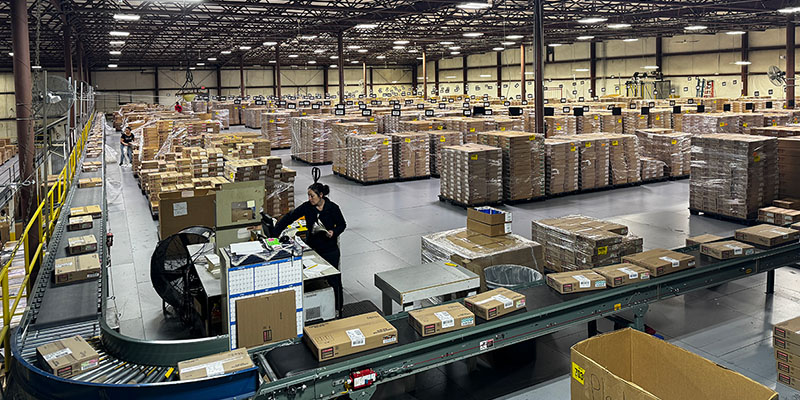
Domestic and global rug manufacturers alike are redefining what “Made in America” means—blending automation, agility, and design innovation to thrive amid shifting consumer trends.
As consumer expectations evolve and the retail landscape shift America’s area rug makers are rewriting the playbook on how to compete — and win — in a changing global market.
From Maine to Alabama to Georgia, companies are investing in automation, supply-chain precision, and closer retailer collaboration to show that proximity, reliability, and responsiveness can rival the appeal of low-cost imports. Still, others are drawing on global integration to remain nimble and design driven. Together, they’re shaping a rug industry that’s leaner, faster, and more adaptive than ever.
Innovation, Close to Home
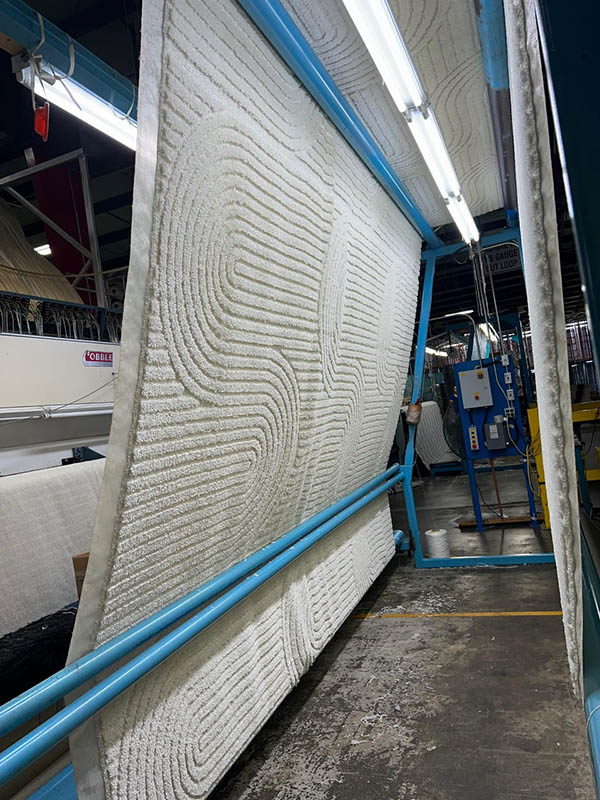
For many manufacturers, agility has become the new definition of competitiveness. At Natco Home, domestic production has been both a stabilizer and a differentiator. With two U.S.-owned facilities—a woven rug operation in Maine and a tufted rug plant in Georgia—the company has strengthened its footing with retailers seeking reliable sourcing and consistent quality.
“Coincidentally, we have had great timing on our domestic production and manufacturing expansion, as we are currently the only rug weaver in the U.S. — and we continue to expand,” said David Litner, principal of Natco Home Group. He added that retailers have responded positively to the company’s reliability and speed, calling long-standing partnerships “a testament to trust built over decades.”
The company’s continued automation investment has also reshaped its production model.“Our total manufacturing process—from manufacturing, to finishing and packaging—is much more automated,” Litner said. “As we improve technologically, we also improve our quality and create a much more standardized product we are proud to see in our retail partners.”

“As we improve technologically, we also improve our quality and create a much more standardized product we are proud to see in our retail partners.”
David Litner,
Principal, Natco Home
Agility, Speed, and Partnership
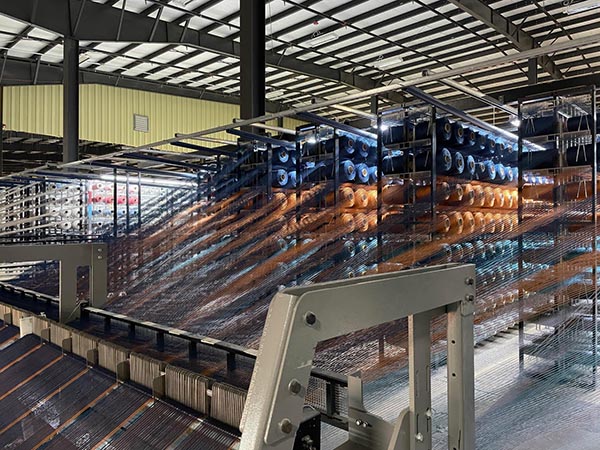
In Alabama, Maples Rugs continues to prove that vertical integration is one of domestic manufacturing’s greatest strengths. The company’s end-to-end control of its operations—from yarn processing to design, printing, and finishing—gives it the ability to react to shifting demand faster than most of the industry.
“At Maples, we’ve always believed that being vertically integrated is one of our greatest strengths,” said Christa Archual-Nie, accounts manager. “It allows us to pivot quickly, control quality at every step, and respond to our customers’ needs faster than most of the industry.”
That agility has made Maples a preferred partner for many retailers juggling smaller inventories and fluctuating consumer demand. “Our domestic production allows us to ship within days instead of months and to collaborate closely with our retail partners on timely, trend-right assortments that drive sales,” Archual-Nie explained.

Balancing Local Strength and Global Scale
For large-scale producers, such as Mohawk Home and Oriental Weavers of America, success comes from optimizing both U.S. and international operations.
At Mohawk, domestic production still anchors its business. Roughly 70 percent of its total output—including residential floor mats, carpet tile components, and rug underlays—is made in the U.S., while select decorative and bath rugs are sourced globally. That balance enables the company to manage costs, maintain flexibility, and continue innovating across multiple categories.
“We try to be as diverse as we can within core categories,” said Bart Hill, executive vice president of Mohawk Home. “We‘re investing in these made-in-USA core categories—and we’re winning despite a tough environment.”
At Oriental Weavers, vertical integration has long provided an edge against global supply disruptions. “OW has long benefited from a globally diversified manufacturing footprint, particularly with our vertically integrated operations in Egypt—the largest of their kind in the world,” said Andy Brumlow, president of Oriental Weavers of America. “This structure has allowed us to mitigate much of the impact from ongoing challenges by controlling yarn production, weaving, and finishing under one roof.”
He added that the company’s expanded design and logistics resources—in both Egypt and the U.S.—have enabled faster development and delivery cycles. “We’ve invested heavily in digital assets, quick-ship programs, and enhanced logistics to better support our customers,” Brumlow said. “Our goal is to make it as seamless as possible for retailers—both brick-and-mortar and online—to sell and deliver our products efficiently and on time.”
For 2026, Brumlow said OW remains “cautiously optimistic,” forecasting growth in performance, washable, and sustainable product segments—categories that align closely with changing consumer values.
A New Generation of Opportunity
While manufacturers refine production strategies, shifting demographics are reshaping the rug market’s long-term outlook.
According to a Circana’s “The Aging Arc” report released in October, Baby Boomers and Gen X together still account for about 65 percent of total U.S. retail spending, sustaining a loyal base of consumers who value comfort, quality, and tradition. But by 2030, Millennials and Gen Z are expected to drive nearly 60 percent of retail sales growth, bringing new expectations around design, transparency, and sustainability.
Each generation brings opportunity: Boomers’ preference for quality supports premium, which in rugs can translate to mean U.S.-made rugs with heirloom appeal. Gen X’s focus on durability rewards innovations, which in rugs speaks to performance fibers and washable constructions. Millennials gravitate toward sustainable sourcing, artisanal stories, and affordable luxury. And Gen Z—motivated by identity— values authenticity, bold pattern, and digital customization.
For U.S. producers, that generational handoff is especially promising. Circana’s analysis suggests that the same attributes consumers now seek—creativity, craftsmanship, and personal connection—are the very ones domestic and design-led rug companies already deliver.
Manufacturing Momentum
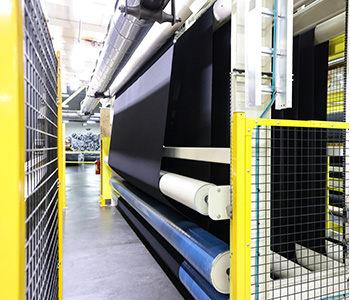
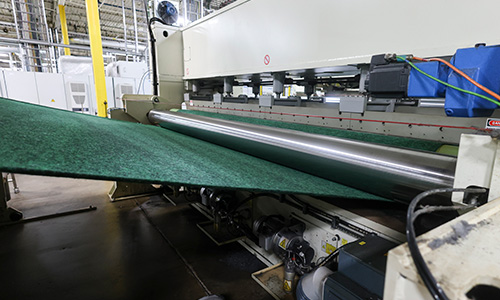
This fall’s National Manufacturing Day, recognized each October, underscored the importance of sustaining America’s production base—including the flooring sector, a cornerstone of U.S. textile manufacturing. In honor of the month-long celebration, Ashley Furniture Industries opened its factory doors to nearly 1,000 students across its U.S. facilities, offering future workers an up-close look at the robotics, automation, and digital design tools reshaping modern production.
As the company noted in a statement, the initiative intended to reflect Ashley’s “ongoing commitment to workforce development and community engagement.” By showcasing the technology and talent driving today’s manufacturing floor, the company said it aims to “inspire the next generation while addressing the industry’s growing need for skilled workers.
In a September bulletin, the U.S. Bureau of Labor Statistics highlighted “carpets” among the goods supporting more than 12.8 million American manufacturing jobs as of May 2024. The inclusion reaffirmed the category’s relevance in the nation’s industrial economy and its role in reshoring and automation efforts.
These national spotlights speak to a larger truth: manufacturing in America is not vanishing—it’s transforming. Across the home furnishings sector, companies are reimagining production with advanced weaving technology, digital design integration, and leaner operations that depend on skilled technicians as much as artisans. In communities from Dalton, Georgia, to Scottsboro, Alabama, mills that once relied on manual looms now depend on programmers, data analysts, and robotics operators to keep lines running efficiently.
For the rug industry, such initiatives highlight both opportunity and urgency—to attract, train, and retain a new generation of manufacturing talent that can bridge craft and code. As the workforce modernizes, the next wave of innovation will depend not just on machines, but on the people who know how to make them hum.
The Path Forward
Across the industry, optimism is measured but real. Manufacturers are investing, refining, and reimagining how they do business—not to chase scale, but to sustain balance.
At Natco, efficiency and reliability have become strategic advantages. “We make great products comparable in price to most importers—and with far less variability and uncertainty,” Litner said.
At Maples, operational speed and partnership define success. “Even as challenges continue, we believe these fundamentals will help both Maples and our retail partners not only endure, but thrive,” Archual-Nie said.
And for Oriental Weavers, adaptability remains the mantra. “Our focus remains on innovation, faster deliveries, and strong partnerships,” Brumlow said. “We want to deliver high-quality rugs that offer the best combination of style, performance, and value.”
Together, they reflect an industry rediscovering its rhythm—weaving a future where American manufacturing and global expertise coexist, evolve, and continue to inspire.