


Nazmiyal Antiques

We recently had a visit from an interior designer who was sourcing rugs for her client, and during her selection process, she asked a question that stopped me in my tracks. She said, “Is this rug new? Or vintage? Or antique? What’s the difference?”

Having worked in the antique rug trade for nearly 30 years, the idea of what a vintage or antique rug is has become second nature to me, so I was taken aback when a design professional needed a primer to explain to her the differences between these  various rug age categories. 
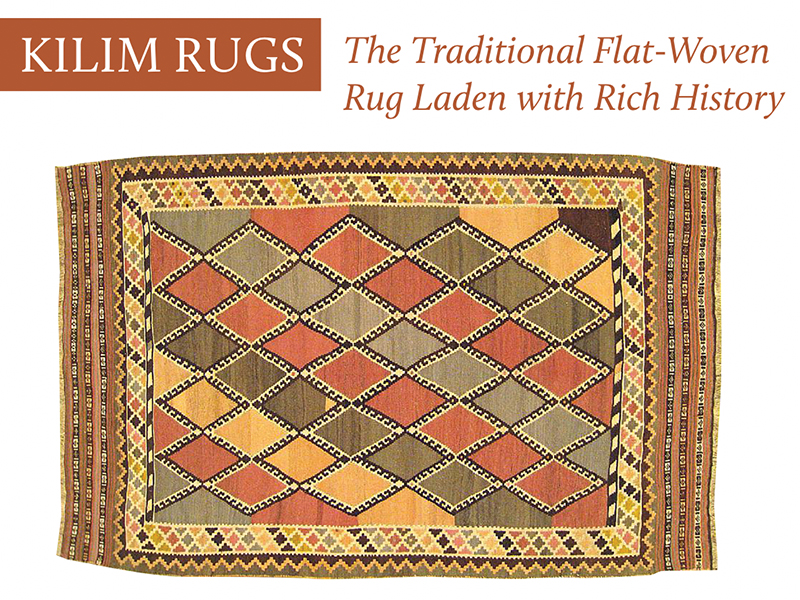
In past issues of Rug Insider Magazine, we have examined numerous antique rug styles, including Sarouk, Tabriz, Kerman, Kashan, Heriz, Bidjar, among others. One thing that all of these rug styles have had in common is that they are all pile rugs, with wool pile that sticks out above the foundational warp and weft of the carpet. In contrast, one of the most beloved traditional rug styles of the Middle East is the Kilim rug, a flat-woven rug style with no pile, but hand- made with the rich history of the various locations from which it emanates.

One of the biggest news items of the last couple of years has been the rise of Artificial Intelligence, and more specifically, of ChatGPT. AI has been integrated into everything from web searches to document preparation to image creation to video rendering. That being said, AI couldn’t possibly make its way into the traditional world of selling vintage and antique rugs, right? Or could it?

Complementing RI’s spring trend focus on Wild & Wooly rugs, there are many variations of animal and nature themes to be found in antique Persian rugs and period European tapestries.

GARDENS, TREES & FLOWERS

In antique rugs, one of the main differences between rug categories is city rugs versus village rugs, with city rugs typically being more finely woven and having more complex curvilinear designs, and village rugs typically being more coarse in their weave, and having more rudimentary geometric designs.

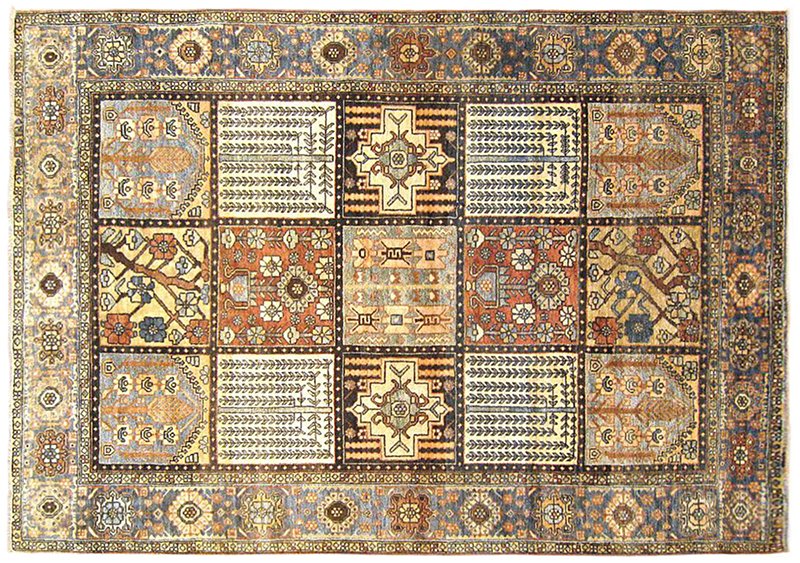
Whether the designs are more curvilinear or more geometric, though, in the majority of rugs, the designs depict various types of trees or flowers, in some way, shape, or form.

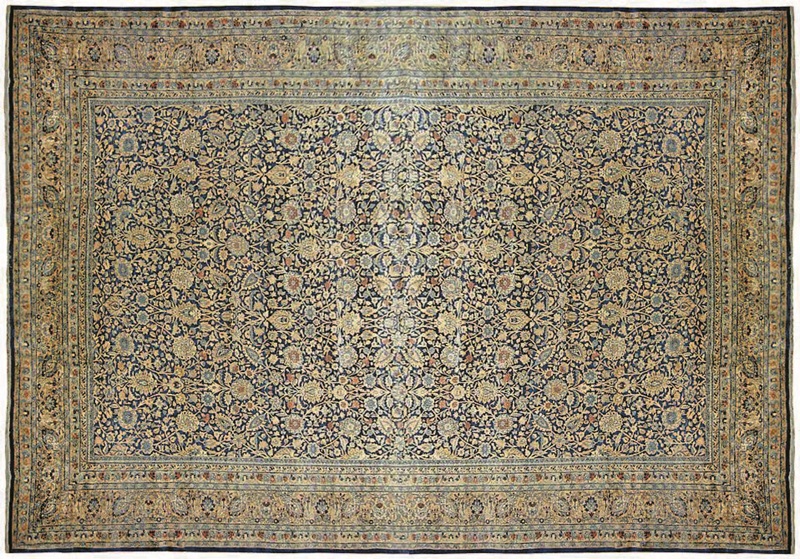
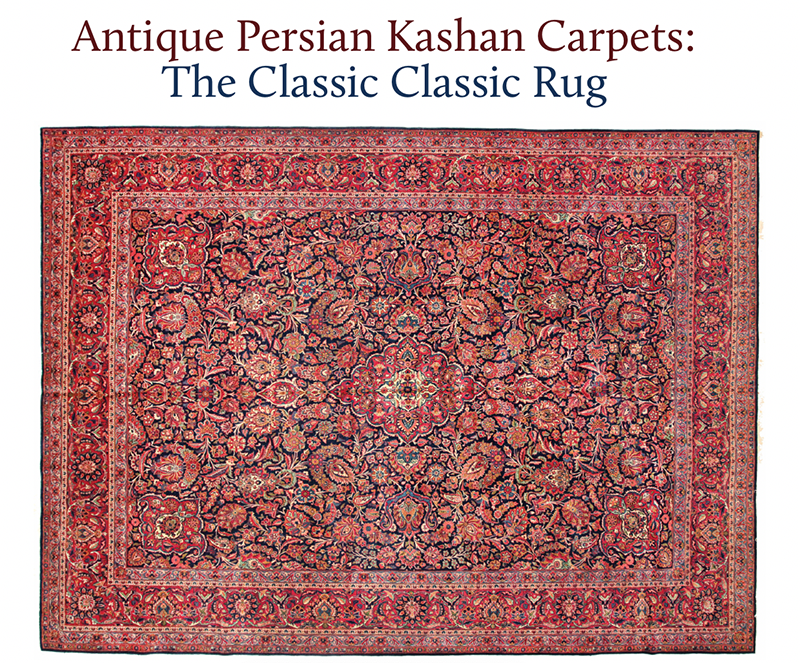
In recent issues of Rug Insider Magazine, we have focused on a number of antique Persian carpet styles, with most of those types of rugs emanating from Iran’s Northwest, such as Tabriz and Sultanabad rugs, from Iran’s central regions, such as Kashan rugs, and from Iran’s South, such as Kerman rugs. A significant style that we will be exploring here are from Iran’s Northeast, from the province of Khorason, and more specifically, from its capital city of Meshed.

Page 1 of 3